
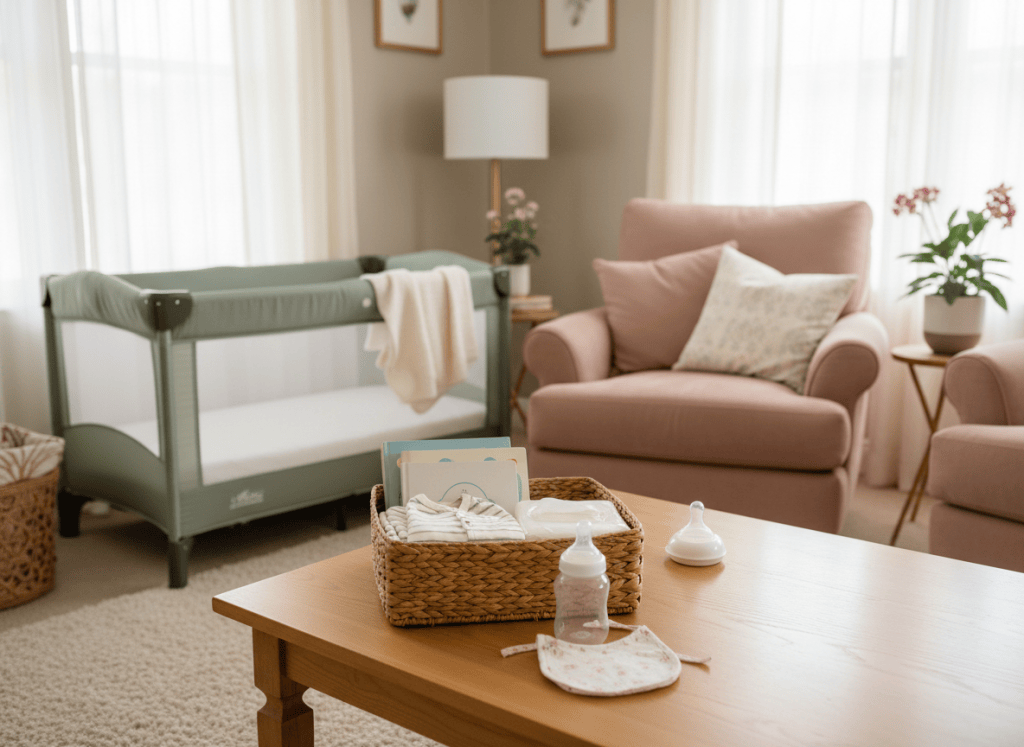
If the grandbaby visits regularly—or stays overnight once in a while—it helps to keep a small set of basics at Grandma’s house. The goal is not to build a second nursery. It is to have enough familiar, practical gear on hand that parents pack less and visits feel easier.
This checklist focuses on what to keep for everyday visits and what extra items become useful for overnights. It is intentionally broader than our sleep-sack and swaddle guide, which covers safe sleep details in more depth.
Start With the Basics for Any Visit
For short daytime visits, you really only need the things that solve the most common needs: feeding, changing, a safe place to set baby down, and a few familiar comfort items.
- Diapers and wipes: Keep a small supply in the current size, especially if visits happen often. If baby has sensitive skin, ask the parents which brand they prefer.
- Changing supplies: A wipe-clean changing pad, diaper cream the parents already use, disposable bags, and a spare outfit can handle most messes.
- Feeding basics: Bottles or cups that baby already knows, burp cloths, bibs, and the right feeding seat for baby’s stage.
- A safe floor-play area: A clean blanket or play mat plus a few age-appropriate toys gives baby a familiar place to play without filling the whole house with gear.
- One or two books: Board books are easy to keep on hand and become part of the routine as baby grows.
For more detail, see our Baby Feeding Essentials to Keep at Grandma’s House, diaper-stocking guide, Toys & Development Essentials, and Baby & Toddler Books.
What Changes When Baby Stays Overnight?
Overnight visits add a few new needs: a proper sleep space, bedtime routine items, enough supplies to get through the evening and morning, and a clear plan from the parents.
- A dedicated sleep space: Use a crib, playard, or other sleep product that is appropriate for the child and set up according to the manufacturer’s instructions.
- Baby monitor, if your layout calls for one: A monitor is more useful for overnight stays when the sleep area is not within easy earshot.
- Bedtime routine items: Keep whatever helps maintain the child’s normal routine—such as a sound machine, pacifier, or sleepwear the parents already use.
- Enough diapers and clothes for the night: Add pajamas, a morning outfit, and at least one extra set in case of leaks or spit-up.
- Morning feeding supplies: Make sure the bottles, formula or milk plan, cups, utensils, and breakfast foods are clear before the parents leave.
For choosing the sleep setup itself, see Pack ’n Play vs. Travel Crib: Which One Belongs at Grandma’s House?. For deciding whether you need a monitor, see Do You Need a Second Baby Monitor at Grandma’s House?.
Keep the Sleep Section Simple
This checklist is not meant to repeat the details of swaddling, sleep sacks, rolling, TOG ratings, or crib setup. Those topics deserve their own safety-focused explanation.
Before an overnight, ask the parents exactly what baby sleeps in now and whether anything has changed recently. Then read our dedicated guide: Sleep Sacks and Swaddles: What’s Safe for Naps at Grandma’s House?. The same safe-sleep principles matter at night, even though the article is written around naps.
The Parent Handoff Matters More Than Extra Gear
For an overnight stay, the most useful “item” may be a quick written or texted routine from the parents. Ask them to leave the information you are most likely to need when they are not there.
- Usual bedtime and wake-up time
- Last feeding time and expected next feeding
- Current bottle, cup, formula, milk, or food routine
- Any medications or special instructions the parents have already discussed with you
- What usually settles baby if they wake
- Where the pediatrician’s number and parents’ emergency contacts are stored
- Any allergies, sensitivities, or foods to avoid
- Current car-seat setup if you may need to drive anywhere
Don’t Overbuy for Occasional Visits
If overnights are rare, parents can bring plenty of the personal or fast-changing items: sleepwear, formula, pumped milk, medication, special creams, favorite pacifiers, and the exact comfort items baby is using right now.
Grandma’s house is usually better served by keeping the durable basics that get used over and over: a safe sleep space, changing surface, a few feeding pieces, simple toys and books, and any larger gear that would be inconvenient to transport every visit.
Our broader 15 Baby Gear Essentials to Keep at Grandma’s House guide is a good place to compare those bigger keep-at-Grandma’s-house purchases.
Before the First Overnight: A Quick House Check
- Make sure the sleep space is assembled correctly and ready before bedtime.
- Check the rooms baby will use for obvious hazards such as reachable cords, unsecured furniture, accessible outlets, stairs, and cabinets.
- Put changing and feeding supplies where you can reach them easily.
- Confirm that the car seat is ready if you may need to drive.
- Ask the parents what has changed since the last visit—babies grow out of sizes, routines, and gear quickly.
For a room-by-room refresher, see our Baby Safety Essentials to Keep at Grandma’s House. If outings are part of the visit, our Baby Travel Essentials guide covers car seats, strollers, diaper bags, and on-the-go gear.
Mamaw’s bottom line: You do not need a complete second nursery for an overnight. Keep the reusable basics at your house, let the parents bring the highly personal or fast-changing items, and make sure everyone agrees on baby’s current feeding, sleep, and safety routine before they leave.


Leave a comment